Build an AI Bookkeeping Service
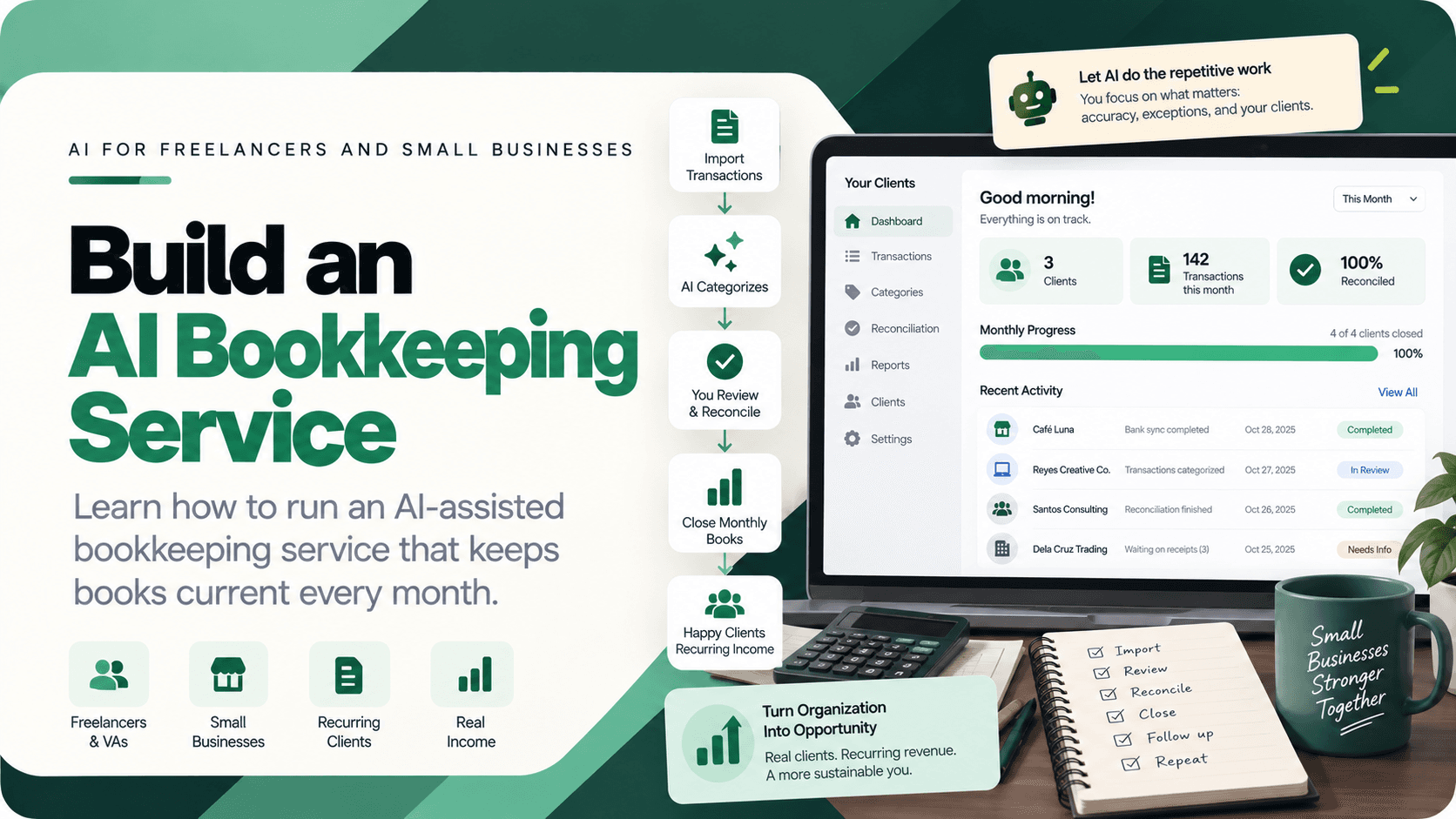
Learn how to run an AI-assisted bookkeeping service that keeps books current every month
About this course
Learn how to run an AI-assisted bookkeeping service: categorizing transactions, reconciling accounts, and closing a client's books every month, with AI doing the repetitive categorization work while you review it, catch exceptions, and handle the client relationship. This isn't about replacing an accountant. It's about maintaining the books a busy freelancer or small business owner never gets around to themselves.
Software like QuickBooks AI or Bench already automates parts of this. What they don't solve is the client who's too busy or not confident enough to run the software on their own, that's the service you're building: someone who actually does it for them, every month, on time.
This course is for freelancers, virtual assistants, and solopreneurs who want a recurring-revenue service business instead of one-off project work, and for bookkeepers who already do this by hand and want to take on more clients without adding more hours.
It's fully online with lifetime access, so you can come back to it as you add a new client or expand into a new part of the service.
You'll need an AI-assisted bookkeeping or transaction-categorization tool and access to a client's bank feed or accounting software. No accounting degree required, though you'll learn exactly where your job ends and a licensed accountant's begins.
What you'll walk away with:
- One client's books maintained end to end for a full month, categorized, reconciled, and closed, not a mock dataset you practiced on
- A monthly close checklist and a client follow-up process for chasing down missing receipts or unclear transactions, so closing the books doesn't stall on someone else's inbox
- A clear, direct answer to who pays and for what: a flat monthly fee per client for maintained books, the same recurring model behind any bookkeeping retainer
- A firm sense of the line between bookkeeping and tax advice, so you know exactly when to tell a client "talk to your accountant" instead of guessing